Emotionally Intelligent
Strategy-Making
Photo: Roosa Bröijer
Why good leaders make really bad decisions?
Experienced leaders often make poor decisions because they rely too heavily on past experiences, even when current situations are fundamentally different.
Their judgment is distorted by unconscious emotions and cognitive biases such as confirmation bias, anchoring, and personal attachments.
Leaders can become trapped by their past successes or professional identity (“this is how we’ve always done it”), which prevents adaptive and flexible thinking.
Effective decision-making requires diverse perspectives, deliberate questioning of assumptions, and structured processes — elements that are often overlooked.
The key lesson is that even smart, seasoned leaders should intentionally build “safety nets,” such as alternative scenarios and checklists, to catch warning signs of flawed thinking.
Video: TEDx Talk – Why Great leaders Make Really Bad Decisions
Why strategy implementation fails?
Emotions are a critical but often overlooked factor in why strategy implementation fails. Resistance to change, fear of the unknown, and lack of emotional engagement can undermine alignment and execution. When employees feel excluded, overwhelmed, or disconnected from the strategy, their emotional responses can create barriers to action. Successful implementation requires addressing these emotions by fostering trust, enthusiasm, and a shared sense of purpose across all levels of the organization.
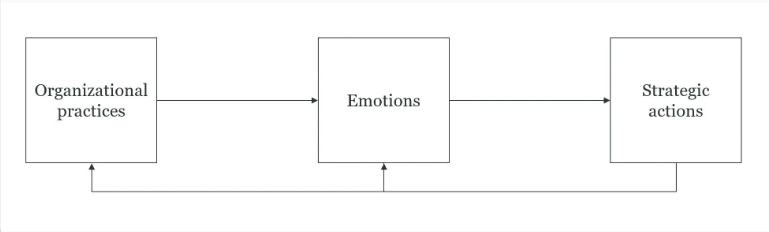
Figure: Vuori, S-T., 2024. Toward an emotion-based view on organizations.
How to play the ecosystem game?
To play the ecosystem game effectively, organizations should harness the power of emotional alignment to build trust and engagement within the ecosystem. Successful strategies hinge not only on technological and operational alignment but also on fostering emotional resonance among stakeholders. By cultivating shared aspirations, addressing frustrations, and celebrating collective wins, platforms can create emotional bonds that enhance collaboration and commitment. These emotional connections reduce friction, encourage co-creation, and strengthen loyalty, making the ecosystem more resilient and adaptive to change.
Video: Insights from Passau Digital Platform Ecosystems research group visit 2025
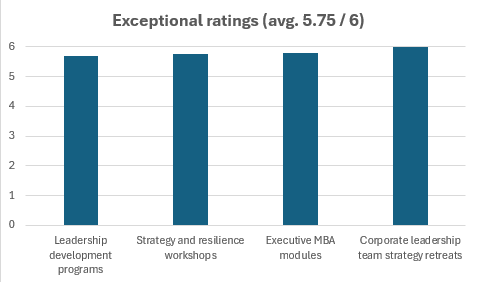
Experiences from the clients
“The best workshop our leadership team has ever experienced.”
— Executive Team, Global Industrial Company
“By far the best teacher in our entire executive program.”
— EMBA Participant, Asia
“Inspiring, eye-opening, and highly practical. I left with tools I used the next day.”
— Senior Leader, Energy Sector
“He challenged us on exactly the right issues.”
— CEO, Heavy Manufacturing
“Interactive, playful, and deeply insightful. The most valuable learning experience so far.”
— EMBA Participant, Asia
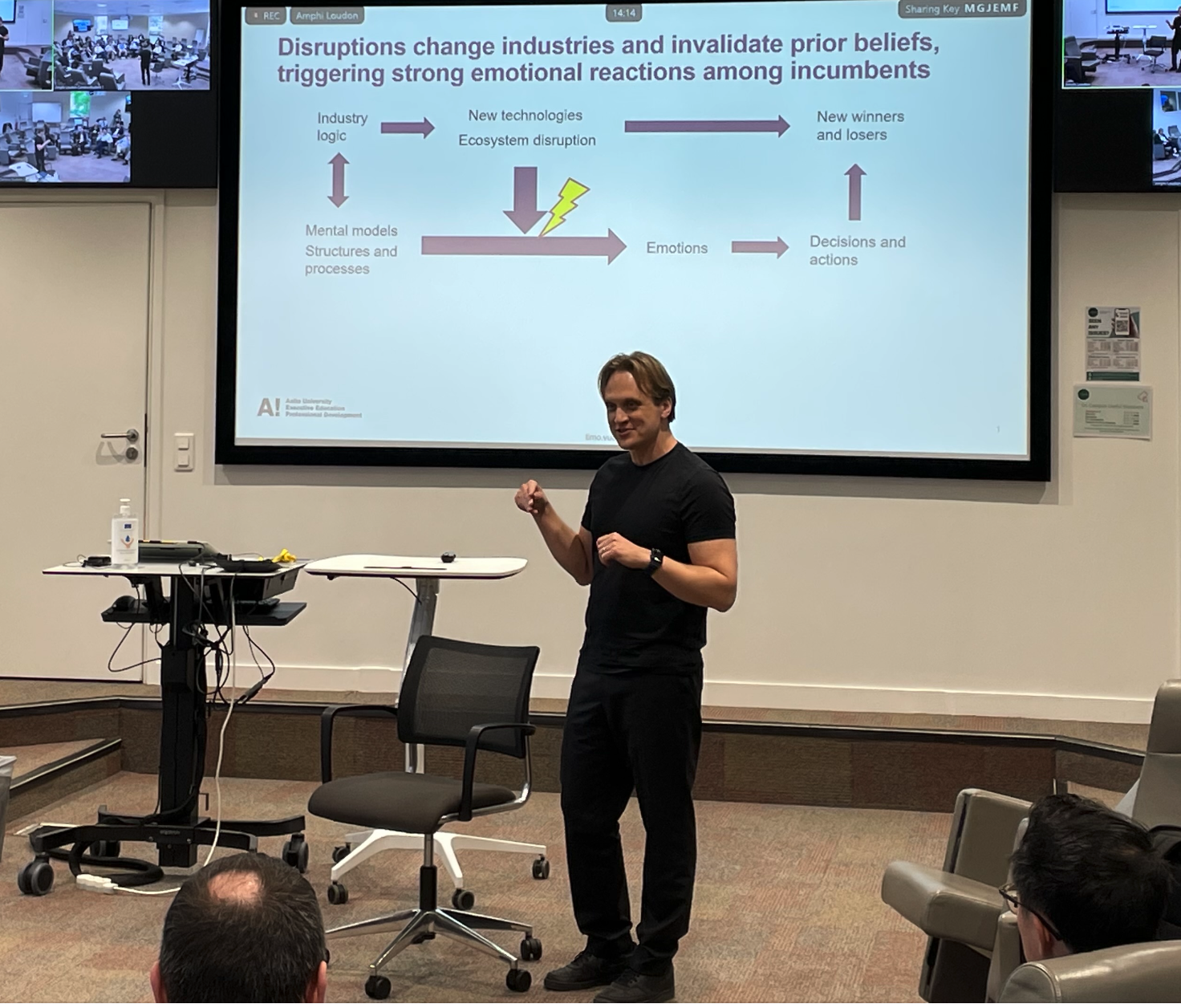
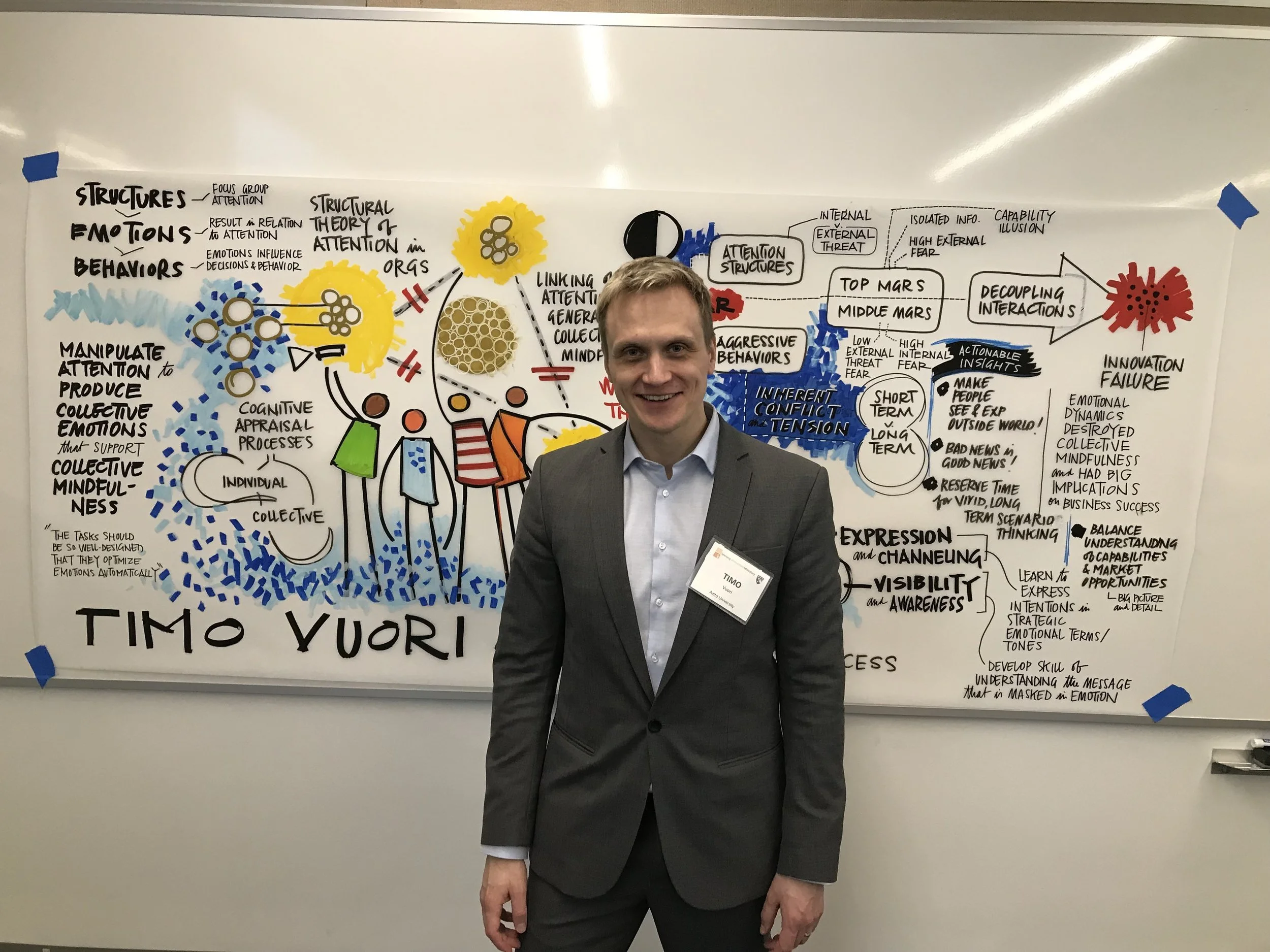
Presentation at INSEAD innovation conference 2024
What Makes This Approach Unique
1. Strategy + Emotions = Better Leadership
Timo Vuori’s teaching integrates strategic frameworks with emotional and psychological tools. This helps leaders understand not only what to do, but also how they and their teams react to change.
2. Highly Engaging & Experiential Sessions
Participants highlight:
Interactive exercises
Real-life cases
Quick prototyping
Emotion-based simulations
Physically active tasks
Structured reflection
These methods drive deep learning and long-term retention.
3. Tailored to Each Organization
Top executives consistently mention:
Timo Vuori’s ability to understand their business quickly
Asking the “right questions”
Providing challenge without judgment
Connecting strategy, culture, and emotions into one coherent narrative
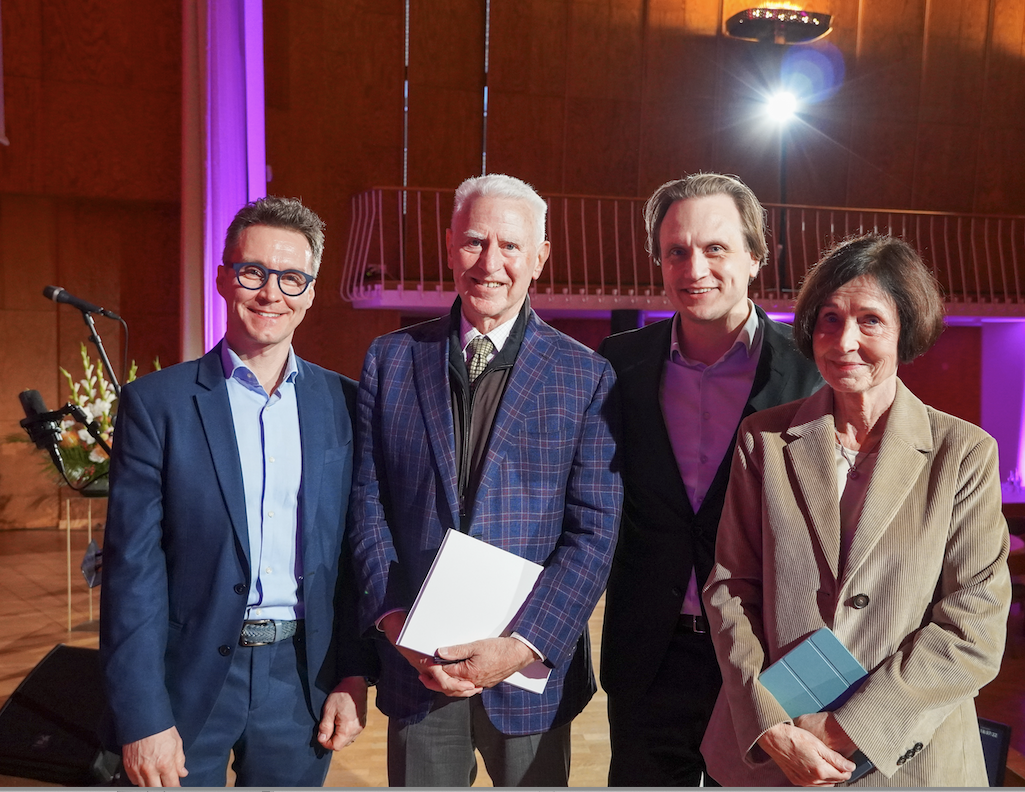
Patrick Furu, Michael Tushman, Timo Vuori, Sari Baldauf, presentations and panel discussion at Aalto EE, 2024
Photo Aalto University / Mikko Raskinen
Interested?
Let’s Work Together !
If you are interested in:
Timo Vuori helps leaders and executive teams think more strategically, feel more aware, and act with greater impact.
His approach combines rigorous strategy tools with deep emotional intelligence — creating shifts that leaders describe as transformational, energizing, and immediately actionable.
We would be happy to discuss how we can create an impactful learning experience for your organization.
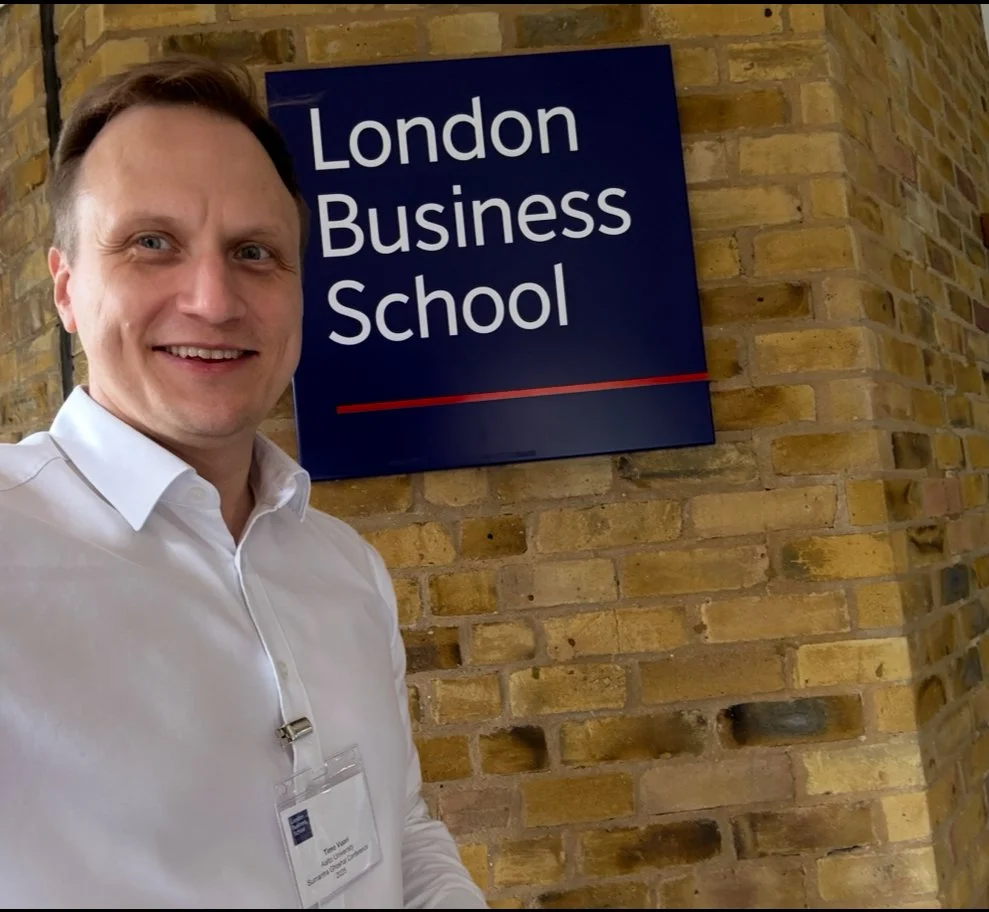
At London Business School with Michael Tushman — here to present our paper.
Coaching Philosophy
Timo Vuori combines rigorous research with real-world practicality and a strong focus on:
psychological safety
emotional awareness
strategic clarity
personal agency
disciplined execution
The goal is not just to teach —
but to transform how people think, feel, and lead.
Who We Work With
Timo Vuori teaches and coaches leaders across a wide range of industries, including:
Financial services
Energy & utilities
Healthcare
Technology and digital services
Manufacturing & heavy industry
Professional services
Consumer brands & entertainment
Public sector organizations
Global EMBA cohorts across Europe and Asia
15 years of research, coaching, and consulting
Top-tier research publications and awards, over 100 executive training sessions, over 30 strategy projects
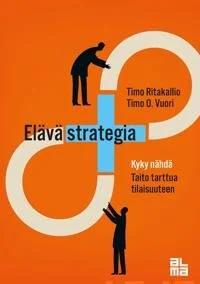
Books
Elävä strategia
Kyky nähdä, taito tarttua tilaisuuteen
The concept of Elävä Strategia seeks to improve the map an organization uses for the continuous development of its strategy. Instead of crafting a vision set in stone, it leverages artificial intelligence, scenarios, analytics, and experimentation to enhance the organization’s ability to identify which critical opportunities are opening—and which are closing—in a rapidly changing world. This enables swift action and allows organizations to capitalize on change for their benefit.
The past valued visionary leaders with strong convictions about where the world was heading. Today, we need leaders who recognize that even their own ideas from yesterday may already be outdated. We need leaders who acknowledge the facts, work based on the best understanding of the present, and inspire their organizations to do the same.
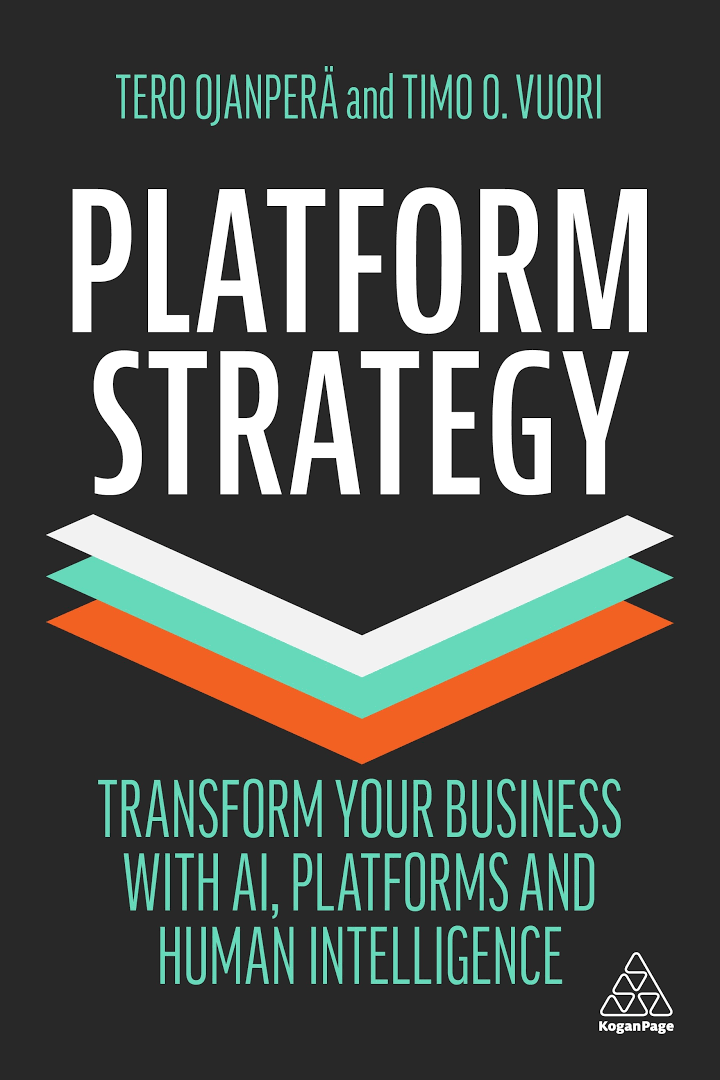
Platform Strategy - Transform your business with AI, platforms and human intelligence
This book leads you through the seven steps you can take to turn your business into a successful platform. It unveils how winning platform companies like Tesla and Amazon operate and how you can apply it in traditional business. Uncover how business leaders at companies as diverse as John Deere, KONE, Goldman Sachs, and Hilti lead their businesses to the future by reinventing their business model.